Колумбія встановлює цільову врожайність 50 т/га, оскільки уряд і виробники узгодили дорожню карту вирощування картоплі
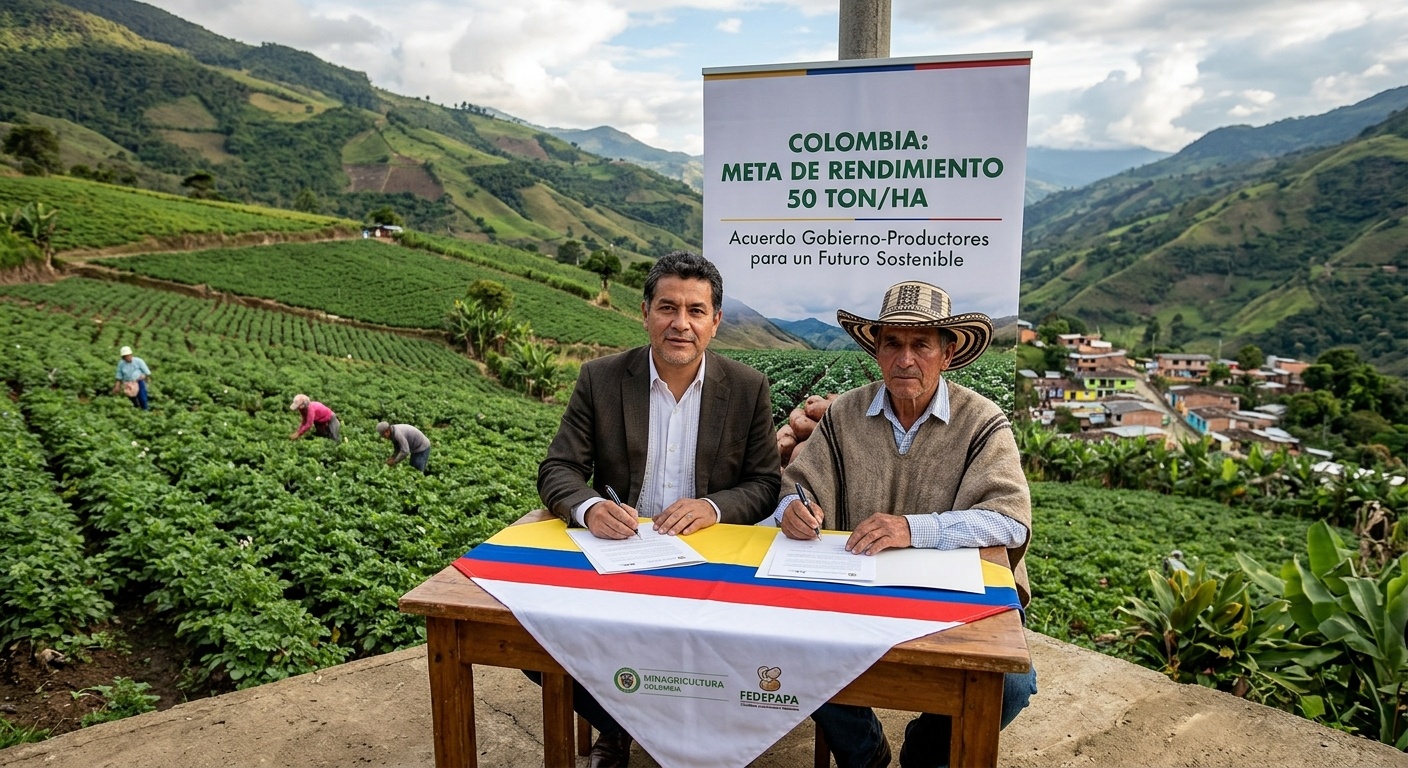
Colombia’s Ministry of Agriculture and potato growers have agreed a roadmap aimed at cutting production costs and lifting yields, with a headline target of around 50 tonnes per hectare. The goal is ambitious. Depending on the baseline used, it implies an increase of roughly two-thirds, or more than double the level the industry’s own federation reports.
What was agreed
The agreement came out of a dialogue session on 25 October in Villapinzón, in the department of Cundinamarca, the country’s main potato-growing hub. Agriculture Minister Indalecio Dangond toured the local potato agro-industrial centre and met growers from several regions. Officials from the Cundinamarca and Boyacá governorates, the national potato growers’ federation Fedepapa and the Villapinzón municipality also took part.
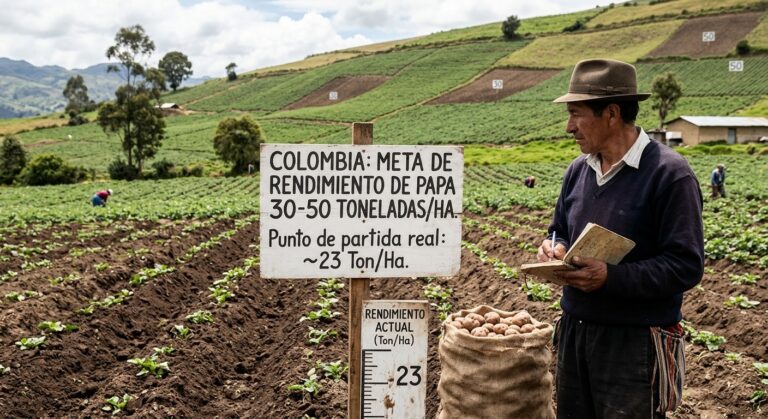
The ministry put forward a move from a reference level of 30 t/ha, cited during the meeting, to about 50 t/ha. That would be an increase of 66.7%. Officials stressed that this is a target rather than a result already achieved. The proposed tools are efficient irrigation, certified seed, knowledge transfer and mechanisation, including simple machinery suited to smallholders.
Будні. Відпишіться одним кліком.
Costs under pressure
According to the ministry, growing one hectare of potatoes now costs about 35 million Colombian pesos, with labour and land rental accounting for almost half of that. At the reference yield of 30 t/ha, this works out at around 1.17 million pesos per tonne. If the same cost per hectare were spread over 50 t/ha, the figure would fall to about 0.70 million pesos, a cut of 40%. In practice the saving would be smaller, since irrigation, certified seed and machinery all add to the cost of each hectare.
Beyond agronomy
The roadmap reaches well past the field. Colombian media reports describe around 16 action areas, including a review of potato imports and trade defence, price stabilisation, action against smuggling, crop insurance with a pilot of parametric cover, and measures to prevent and control purple top disease. Financial relief for indebted growers is also on the list.
On the market side, the plan calls for more value to be added through washing, grading, packing and standardisation, opening the way to supermarkets, restaurants and processors. The ministry and Fedepapa expect to move the plan forward during 2027.
How big is the gap?
The starting point matters. Fedepapa, drawing on national statistics agency DANE data, projects the national average yield at about 23 t/ha, based on a planted area of around 111,000 hectares and output of roughly 2.6 million tonnes. Measured against that figure, a 50 t/ha target means more than doubling productivity.
The goal is not out of reach in absolute terms. Germany harvested 12.7 million tonnes from 282,000 hectares in 2024, an average of about 45 t/ha, according to a Fedepapa bulletin. Colombia, however, grows potatoes largely on small farms across Andean terrain, where rainfed production, seed quality and access to machinery vary widely.
A sector under strain
The initiative follows a difficult 2025, when growers blocked roads in Villapinzón and called for limits on imports of frozen potato products. Debt remains a pressing issue for many producers. Minister Dangond said the future of Colombian agriculture depends less on having more land than on raising productivity, and the government said it intends to work with every link of the potato supply chain.
Sources: Colombian Ministry of Agriculture and Rural Development, as reported by Argenpapa, Forbes Colombia, Agronegocios, Portafolio and Blu Radio; Fedepapa market bulletins; El Tiempo.